


Berlin Atonal returned in 2023 after four silent years, and it went long. Two weekends, six concert nights, and a ten-day sprawl that was noisy, feral, and beguiling. Pent-up pandemic vigour was put to good use and Atonal's shackles were well and truly off.
For 2025, the event tightens its aims, returning to its previous five-night runtime, with a Kraftwerk-based programme that leans into long-form listening early, and delirious small-hours energy past midnight. Practical tweaks, including a single, do-everything Main Stage, a PAN-curated listening space, and late-night food and coffee options, make the marathon altogether kinder on the body, helping you last the distance. The headline alteration, though, sits downstairs.
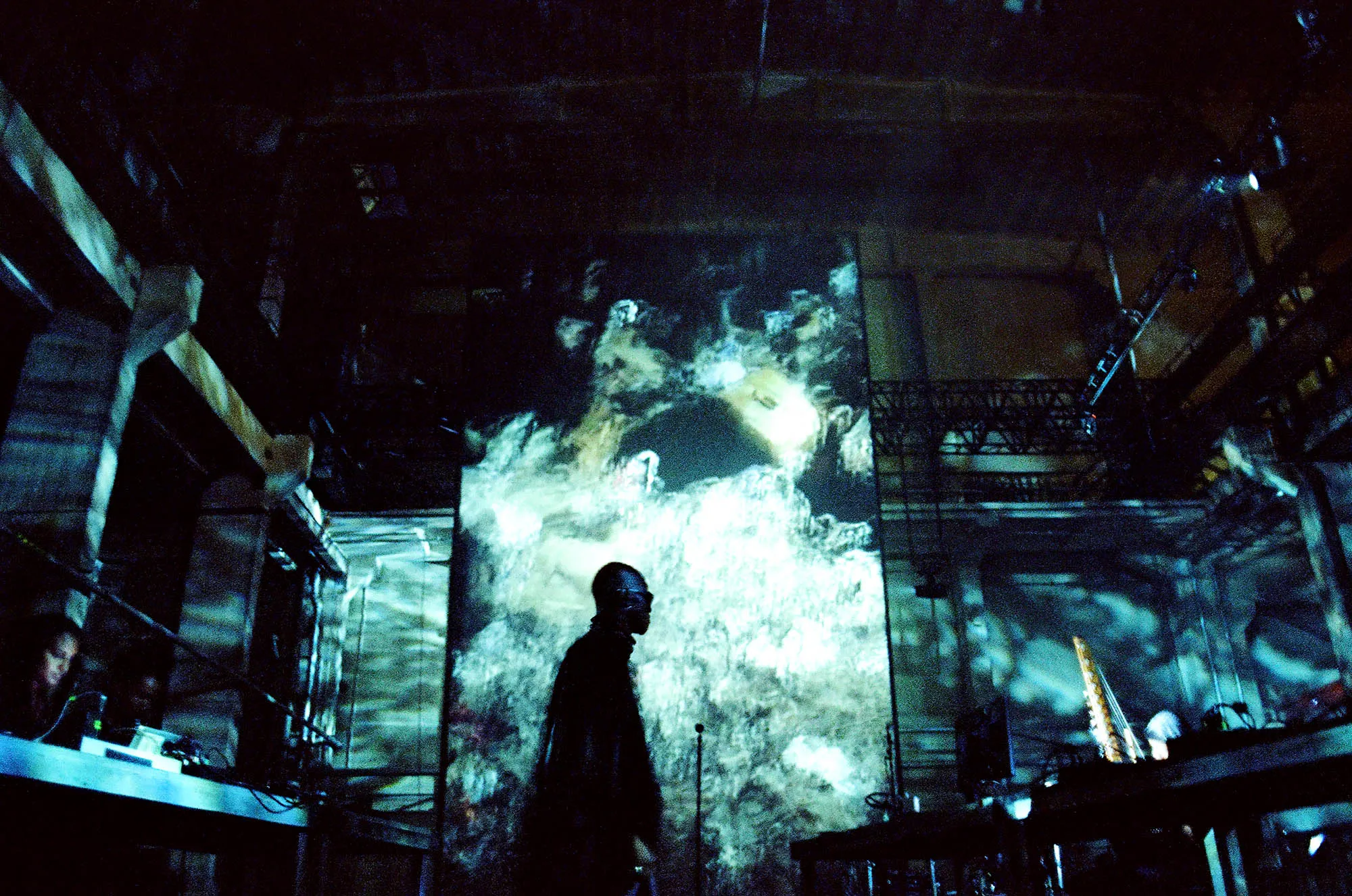
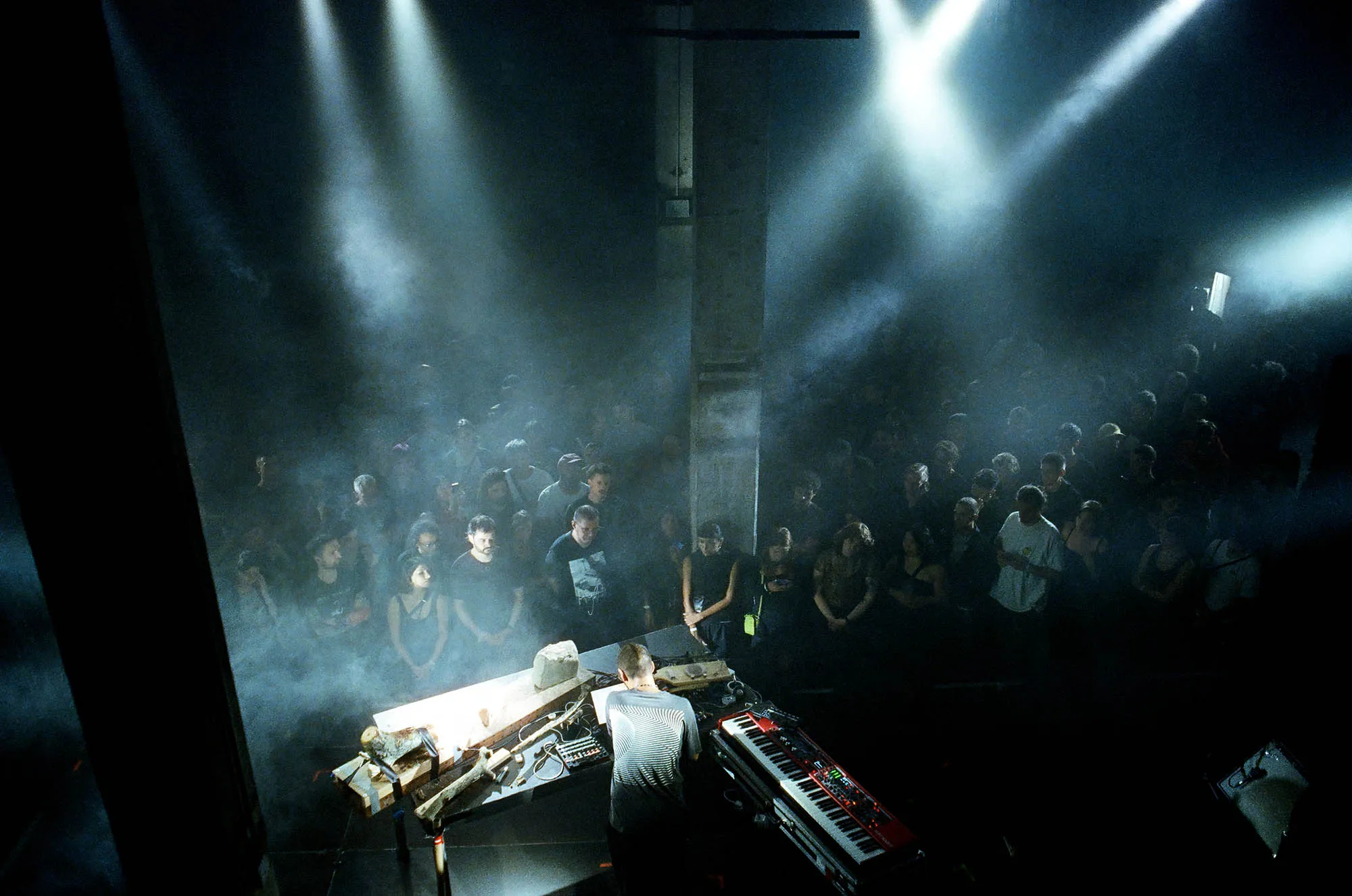
There's an entirely new stage for 2025, called Third Surface – but returning 'atoners' will find it less 'new' and more re-configured. Like Stage Null before it, this one takes the biggest ground-floor chamber, but the platform is turned 90° toward the entrance and tucked to the right-hand wall. It's a subtle change, but an elegant solution that opens up the space considerably. Concrete pillars that once made for awkward dead zones, as noted in my 2023 Atonal review, now frame the stage's corners, freeing the centre for clearer sight lines and stronger sound. Extra footprint means space for three seating banks, too: café-style tables at stage left and more sat on tiered, bleacher-style platforms to the back of stage centre and right. Instead of funnelling attendees into the same central spot, as one tightly-bound blob facing the stage, crowds spread across these dedicated zones. Central bottlenecks are eased even further, and these higher vantage points also allow shorter listeners (often blocked by plenty of tall Europeans upfront) to get a better view. Opening at 1am each day, potentially some seven hours after the opening acts, the seating naturally doubles as a late-night relief for the weariest of legs, all without leaving the music.
A pair of Third Surface highlights are two AD93 signees with showstopping drummers. Noise-cum-punk-cum-dance troop rockers YHWH Nailgun are the first. Drummer Sam Pickard is superbly controlled, always eyeing his bandmates' moves as he teeters on the brink of a next rototom fill. He'll abruptly shift the meter and deny you the downbeat just when you want it. Hard to dance to, it is – you can understand why vocalist Zack Borzone opts to thrash around like a tormented fish – but it keeps your eyes as wide as his, fully engaged for the near hour they perform. YHWH Nailgun need to be experienced live.
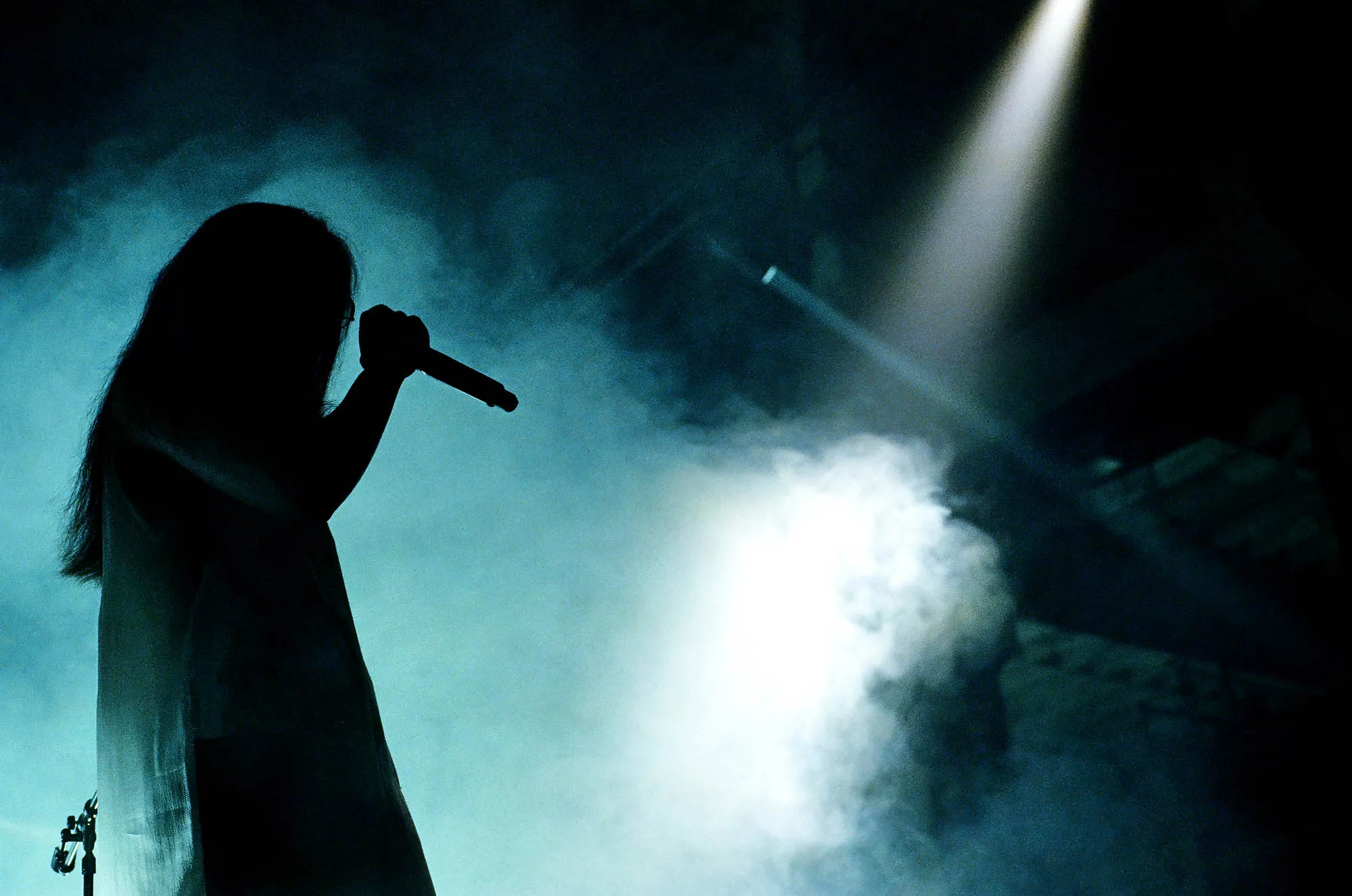
Moin are the other, and one I'm much more familiar with. Like Pickard, Valentina Magaletti's percussion steals your focus, bringing more than just the tempo to the band's post-whatever rock. A week earlier at Rally Festival in London, the crowd talked through much of Moin and Sophia Al-Maria's set, as she later concurred via Instagram. It was distracting, and arguably downright disrespectful. Here, in Kraftwerk's semi-covered nave, that wasn't an issue. The atmosphere was tightly compressed and a little rowdy, with the crowd swelling under a smokey haze. But as Magaletti's polyrhythms drove guitarists Joe Andrews and Tom Halstead's snapped-together tones towards their climax, all were locked in a pendulum of chin-down nods and turns.
Like Null before it, Third Surface is essentially a place for those acts that don't quite fit with the grand spectacle of Kraftwerk's cavernous Main Stage floor, and aren't necessarily 'dance music' enough for the legendary Tresor, nor its club sisters OHM and Globus.
Chuquimamani-Condori is the best example of such a hard-to-place artist: tags and chopped voices skitter across the PAs, as bit-crushed snare rolls flare, and a bed of sustained chords tug the room forward in slow, swaying increments. Their Andean folk take on the club vernacular is astounding, mixing such trademark motifs (as on 2025's Los Thuthanaka LP), with left-field edits such as the country ballad Can't Take My Eyes off You by Lady A.
There's a spin of The Who's Baba O'Riley, a track born out of Pete Townshend's fascination with Sufi musicologist Inayat Khan and his sense that sound vibrations bind the spirit with "music is the nearest way to God". Chuquimamani-Condori likewise frame their digital reworkings founded in their Aymara heritage as "medicine". Crunchy, noise-laden swells are frontal by design, and almost abrasive to the uninitiated, acting as a refusal to sleek, futuristic sound design practices the Bolivian-American artist called a "mode of educated whiteness". Here, collective history plays out in the present: the folding of the past into the future, as Chuquimamani-Condori sees it, where "to move forward is to also return".
In that light, their ritualistic looping of Baba O'Riley reads as another ceremonial choice by an artist defined by intention – aside from being a solid tune in of itself. Cut with their abrasion by design approach, and the track bites hard as we hit the near-4am mark. Smooth, algorithmic 'Perfect Fit Content' could never.
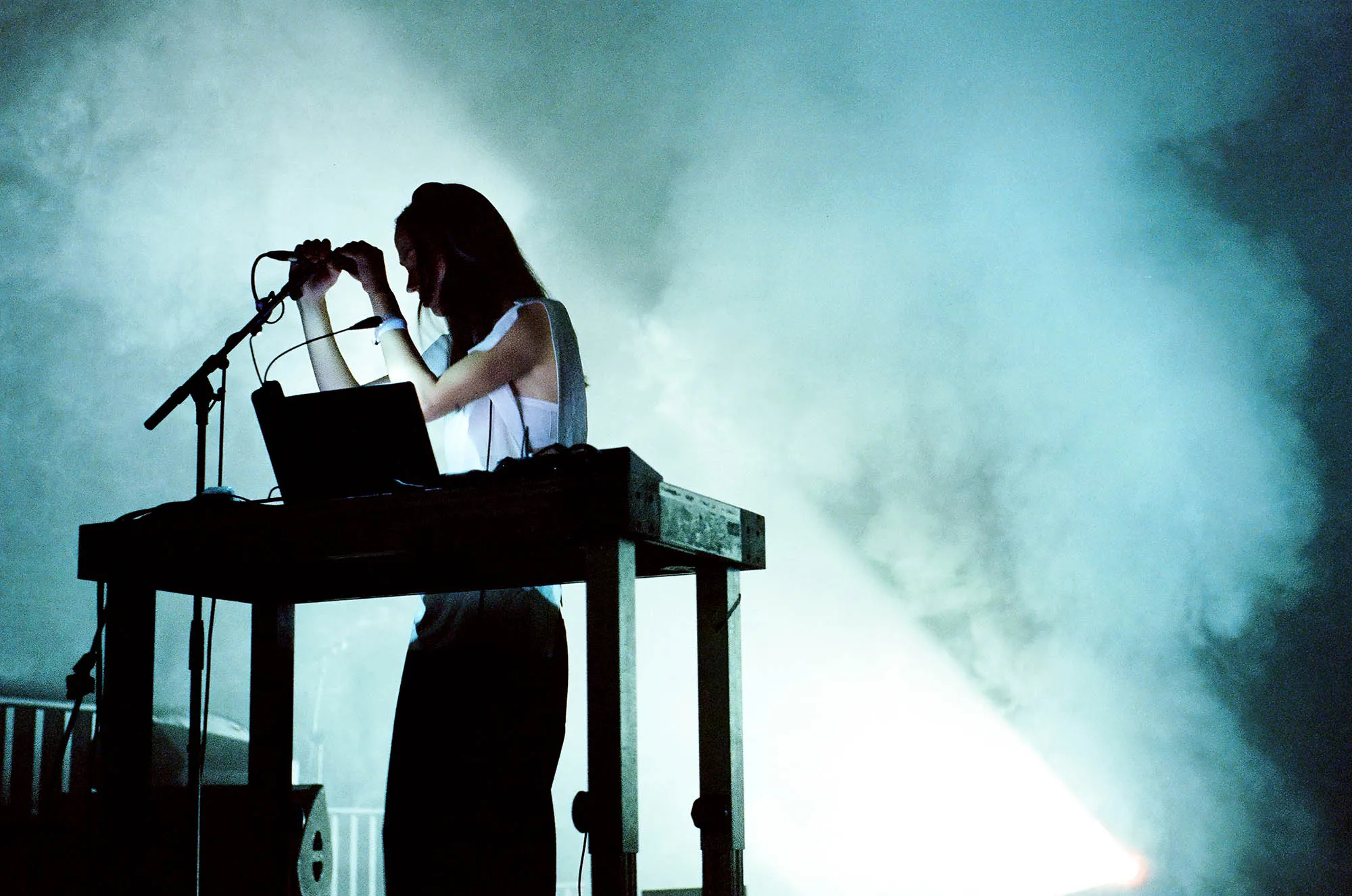
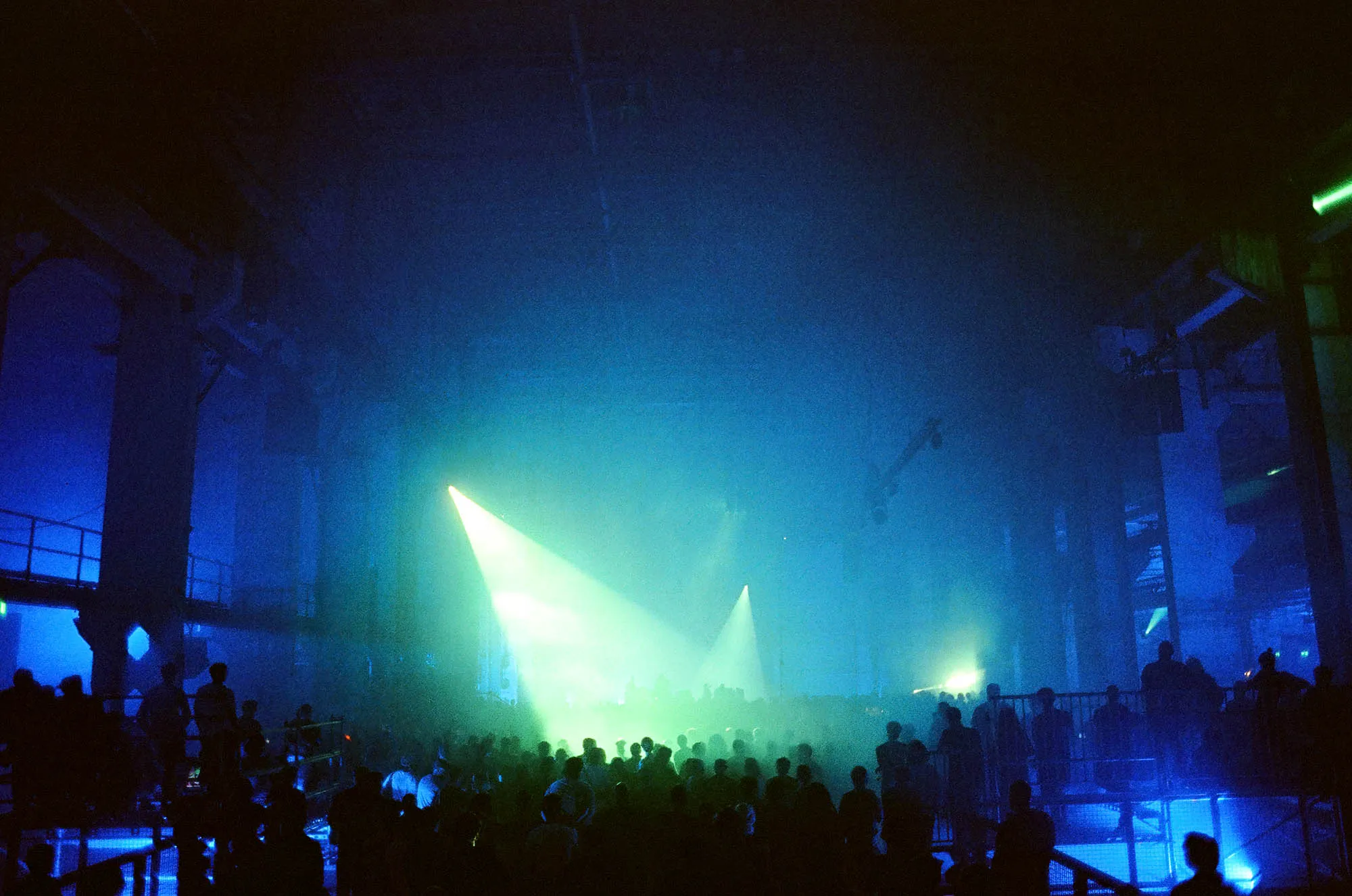
Upstairs, Atonal's Main Stage feast begins much earlier, around 8pm, and there are changes to the setup here, too. Previously, there were two stages on the floor: one with towering speakers and vertical projection capabilities at the far end, and a smaller alternative at the other. Each took turns two years ago, resulting in audiences twisting every hour like a slow-motion tennis match. Today, only the larger remains, and it's clear why. If you have all that space and equipment, make use of it: put on the most compelling shows possible, and other artists not suited to it can play elsewhere.
The most gratifying sets here live in the details, and make use of Kraftwerk's bellowing headroom. Profoundly effective in this regard is ambient-adjacent group Purelink. Their dub rhythms slowly morph alongside hypnotising layers of pads and intricate IDM-esque flourishes, and you physically feel the force of each hazy, low-end pulse. Even from the back (where I sat to soak in Mika Oki's full sunset-led visual accompaniment), the sound was startlingly clean. I loved Faith (2025) on record, but in this resonant hall it felt newly entrancing, and deeply emotional. As with YHWH Nailgun, Moin, and Chuquimamani-Condori, Atonal have absolutely nailed the zeitgeist here, and Purelink delivered one of my favourite shows of the year, all on the perfect stage for them.
The same holds for the more classically 'ambient' artist Malibu, who teased snippets from her debut album, Vanities, which arrives next month. She invoked similarly soothing sensibilities to her mix series United in Flames, and her two previous EPs, all set to the hypnotic arcs of her now customary fog light setup.
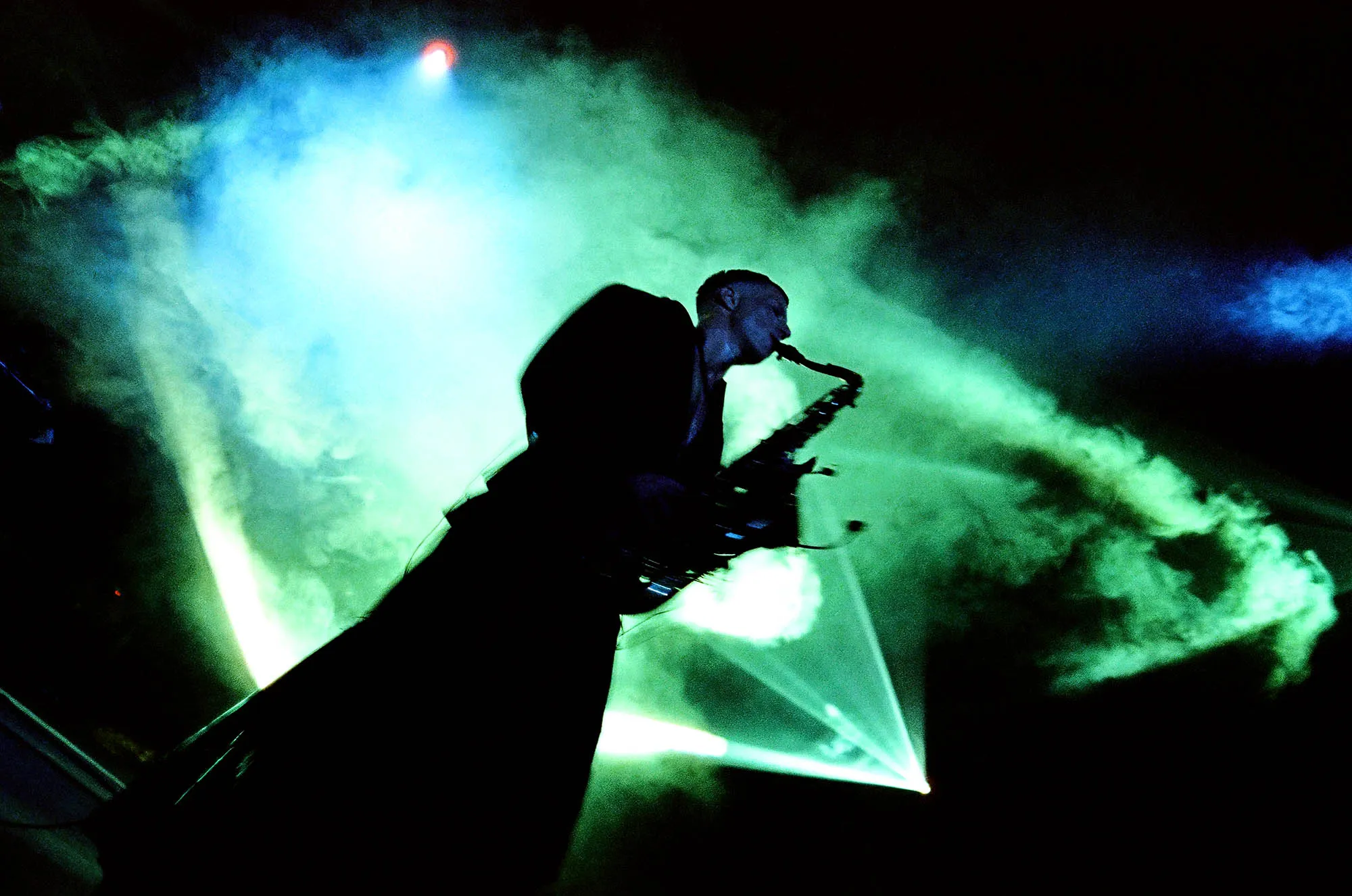
On this sound system, ambient music gives you proper air between sounds, with wide dynamic range, long decays of reverb and minute envelope shifts. And it's a similar story for the other through line in Atonal's Main Stage programme of noise music, where saturated microlayers of texture are revealed inside larger surges.
Griend (Puce Mary and Rainy Miller) staged a near-lightless onslaught of dense sheets of hiss and feedback, engulfing Miller's voice which flickered between auto-tuned melody, shouts, and cut-up speech. It felt consistently oppressive, and less reminiscent of Miller's solo performance at Atonal 2023, which built towards an emotional climax around his lyrics of family, class and trauma, while he climbed through the crowd and up raised walkways. Some moments still felt particularly poignant, such as his version of Uranian Swallow, and Miller is someone built for the live arena, so it's hardly surprising he got a return booking.
The veteran trio Merzbow, Iggor Cavalera, and Eraldo Bernocchi worked at similar pressure points here, and judging by the size of the crowd, were one of the most anticipated sets of the festival. Cavalera toggled between primal attack and meditative pocket, as Bernocchi threaded low drones and the metallic shimmer of his cymbals into a breathing architecture (or quite possibly, local air-con relief in the hot conditions) before Merzbow arrived with tectonic slabs. POV visuals of a rainforest exploration paced the consistent churn. Similarly to Griend, catharsis arrived more as a slow cleanse than an outright peak, and perhaps, with its droning undertow, it felt like an approachable entry point for the Merzbow-curious.
As you might expect from a city like Berlin, these Main Stage Atonal acts are reflective of a festival built more on artistic seriousness than, say, anarchic, belly-aching 'fun'. Though, acts in the bunkers of OHM, Globus and Tresor typically cater towards more hedonism.
The most engaging mix I saw here has to go to a DJ I had not personally heard much of previously: NVST. She offered constantly shifting dance tunes across her three-hour run, starting around the 120bpm mark, pushing up to the 160s, before coming back down to below 100bpm. The insidious bass on Objekt's Bad Apples hits in the all the right places, as do plays of percussive flourishes found on the likes Glimmerman's Plant Passport. DJ Richard's Critical Damage hits particularly hard too, with a nasty industrial stomp.
Still, it must be said that in the domain of outright fun, Third Surface was still the stand-out arena in my books. And it's all respect to the programmers for keeping me over there for so much of the festival.
The styling of everything upful are the purest delight. Invited to do something different, Gavsborg assembled Kat 7, Tóke and Riddim Writer (groundsound) for a near three-hour "celebration of friendship in sound". It opened with Riddim Writer's incense-laced spoken word but by the mid-point, things were joy-drunk and bass-forward. Via the somewhat archaic Audacity audio software (if it works, it works), on-duty DJ Gavsborg threaded Equiknoxx's off-kilter rhythms through dancehall and dub frameworks. The floor loosened into one big, goofy dance, with the widest smiles I saw all festival. By 5:30am, everyone looked spent, crowd included. But the delirious, afters-type energy held out until the end, when Kat 7's microphone gave out, Tóke puffed a fake zoot and Riddim Writer steered a final call and response to the finish.
Lechuga Zafiro and Verraco's world-premiere presentation of the live/DJ performance Hyperverbana is another moment of outright euphoria. Commanding the most unbroken dancing I had all festival, Zafiro's live drumming syncopations break out into cumbia and dembow, interchanged for jungle, EBM and more as Verraco twists at the FX chains. Their collaboration is a superb matching of minds, as the duo reign in each other's strengths – Zafiro's being his candombe-like drum patterning, and Verraco's an expansive, transglobal taste for contemporary club – for a more cohesive, alluring whole where no track felt like a sore gear change, nor too much of the same.
Towards the end of their onslaught, Up and at Them! by Atonal alumni aya & BFTT gets a run out to settle the pulses. But the sheer cardio of it all has many taking refuge in Kraftwerk's outdoor seating zone soon after, as the pair take their applause and introduce the forthcoming Chuquimamani-Condori via Los Turros' cumbia-folk track La Gate Del Vip.
On the subject of refuge, a major boon of this year's edition is the inclusion of food and drinks stalls inside the venue, running late into the morning. Stalls still run outside until around 1am, but vendors now set up on the second floor too, serving until at least 4am. As a punter, being able to grab a coffee or a fair-priced meal keeps you upright and energised without defaulting to booze (or any other alluring drugs in the wings). I can't recall seeing that at an indoor club-setting before (London venues, take notes). Better, yet, the food was delicious: shoutout Tantan Douhou's divine Chengdu-style noodles.
The introduction of Kraftwerk's new listening space, sat inconspicuously behind a door on the corner of the top-floor, is another safe-space to replenish energies. It's a low-lit, chill-out room filled with bean bags, themselves surrounded by the power plant's old wall length controllers. It's also a place to hear good tunes, though, with a soundscape courtesy of the label PAN and its Entopia series, and each night being a different selection from the likes of Anne Imhof. People whisper, or close their eyes and lie completely still for some silent transportation. Fifteen minutes in there lengthens your hearing, to go again.
I often pined for such a sit-down after the end of the Third Surface programming, but unfortunately, the top floor is shut off with the end of the Main Stage sets at around 1am or 2am. Still, there are other avenues to restore your senses. Downstairs, the bean-bag projection space (co-curated with Demo Moving Image) slows the pulse with long-form works by the likes of Basma Al-Sharif, Nelson Makengo and others. Just outside Third Surface, Steinar Haga Kristensen's Ultraidentifikasjonspaviljon lets you steer his sculpture-like avatar through a 3D terrain of his works. When you're returning to the same building for five nights, opening different doors and having different stimuli matters. Even if you live for the music, these pockets tune the mind in different ways, or even make you an active participant. Step back into a set after that, and you feel somewhat reset.
Were the music not so intensely to my tastes, I may have used these areas more. Granted, not everything landed. I've seen Amnesia Scanner several times over the past near-decade. Perhaps a combination of their glitching, maximalist sound wearing thin on me and the real-world catching up with their dystopian project, but I was left a little hollow by their Atonal performance. In a doom-scrolled, AI-churned attention economy, their approach lands a little flatter.
Debuting S.L.O.T.H on the Main Stage, they veered from brash nu-metal and grindcore breakdowns to distorted dubstep and donk within seconds under Freeka Tet's growls. At times, it's compelling, a blast of nihilistic newness, and then gone in a blip. As a mirror of the TikTok scroll, those short swipes could make sense, but set amid long-form works the Main Stage housed, they read as autotelic provocation. The visuals too, once central, were reduced to smoke-and-strobe. Mood-making, perhaps, but it only threw the sound into sharper focus, as something I couldn't sink into before being pulled out again.
I was also less drawn to Globus this time around, compared to two years prior. Despite its physical facelift, which gives another fresh side to an ever-evolving Kraftwerk, I found myself leaning away from the decidedly UK-inflections of drum & bass, dubstep and breaks played by the likes of Significant Other and Pinch.
Others are simply not in my wheel-house. Lord Spikeheart's physically commanded themselves like no one else on the Main Stage, rushing around from left to right with microphone stand in hand, before bending over to thrashing their locks in circles. The audience moshed to his guttural, death-metal style screams, though never raised on or much associated with the genre myself, I couldn't help but find it a tad grating on the day.
No disrespect to any of the above, not everything is for every person. That's the nature of a festival. We arrive with shifting tastes and different daily thresholds; some artists hit, others don't. I'm sure plenty of first-timers found Amnesia Scanner alluringly frenetic. The brilliance of Atonal is the layout: four stages in one complex, easy to drift like a 19th century flâneur, easy to cherry-pick what your ears find appealing.
When not all rooms run (this year, on two of the five nights), heavy queues can appear, though rarely. The only queue that beat me was at OHM for minimal and dub-techno masters Azu Tiwaline and Moritz von Oswald. I chose not to miss Topdown Dialectic's delicate second-ever live show, and caught a moving rendition of Escape Lounge by Heith just after. Sometimes what feels like a missed opportunity sets you up for others in return.
If you're thinking of coming to Atonal then, make peace with skipping things. With a 12+ hour programme, five days straight, you won't do it all unless you're fuelled like a lab rat. Instead, pick a few anchors, then listen to your body in between. Follow your ears, change rooms when your energy wanes, step outside when you need air, use the late-night food and coffee to put the lights back on. There are plenty of pockets for a reset, whether that's the listening room's bean bags, the ground-floor films, a few minutes steering an artist's avatar, or watching a gardener mist his plants.
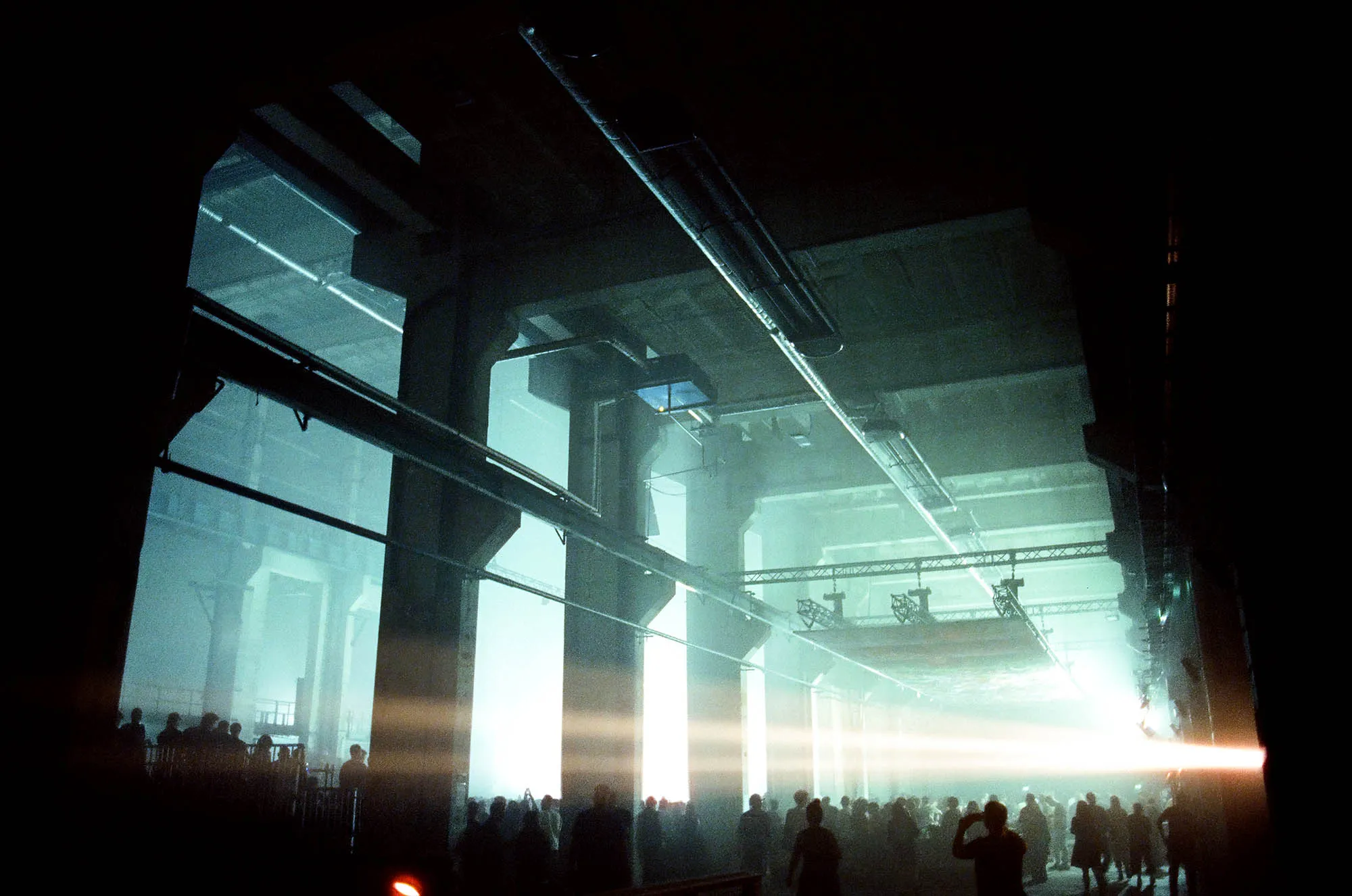
As a music lover, I never want to leave Kraftwerk's concrete cathedral; I only do because I'm tired. Atonal built ways to keep you standing longer, and this year the building felt even more tuned to the run as a result. Deep listening early, delirious small hours, the programme stretching past 8am on Saturday without breaking the spell.
If you're thinking of coming to Atonal then, make peace with skipping things. With a 12+ hour programme, five days straight, you won't do it all unless you're fuelled like a lab rat. Instead, pick a few anchors, then listen to your body in between. Follow your ears, change rooms when your energy wanes, step outside when you need air, use the late-night food and coffee to put the lights back on. There are plenty of pockets for a reset, whether that's the listening room's bean bags, the ground-floor films, a few minutes steering an artist's avatar, or watching a gardener mist his plants.
When not all rooms run (this year, on two of the five nights), heavy queues can appear, though rarely. The only queue that beat me was at OHM for minimal and dub-techno masters Azu Tiwaline and Moritz von Oswald. I chose not to miss Topdown Dialectic's delicate second-ever live show, and caught a moving rendition of Escape Lounge by Heith just after. Sometimes what feels like a missed opportunity sets you up for others in return.
Maybe there were fewer 'breakout moments' this year. Nothing as manic as Prison Religion or as tear-streaked as ¥ØU$UK€ ¥UK1MAT$U's Sakamoto tribute last time out. But in their place, a steady stream of thoughtful sets: more emotionally levelled out, but many that I felt a little deeper. Atonal has built its reputation on showcasing a near-genreless milieu of the best contemporary voices, and it again hit the mark with some of the most compelling performers working now. Whether it is subtle reframing to its programming or further tinkering to the physical setup, I have hope that the 2027 edition will have as much depth of thought – and it can't come soon enough.
Words Matt Reed
Photos Frankie Casillo